Problem
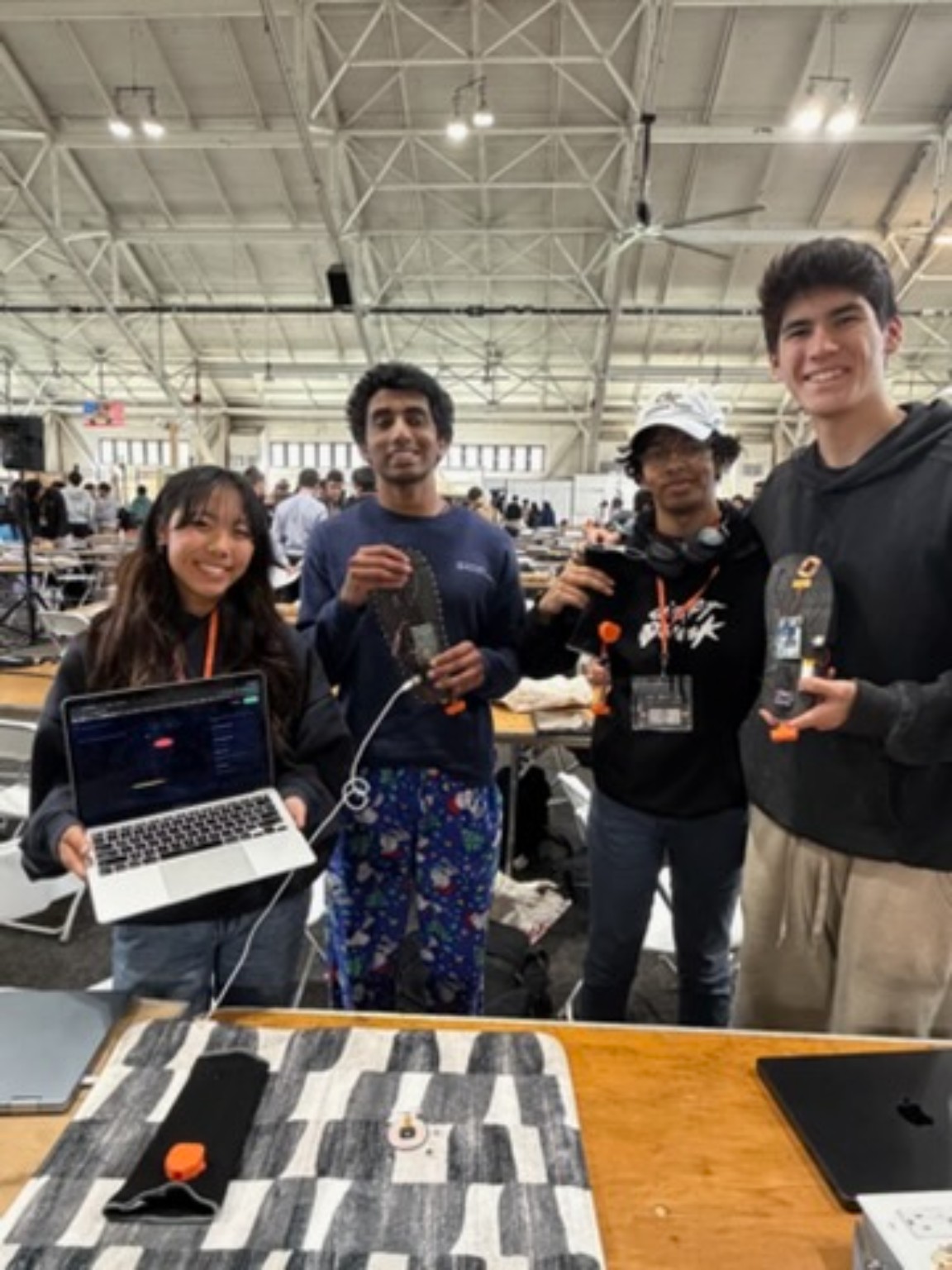
Peripheral neuropathy reduces sensation in the feet. Without feeling in the soles, people lose the sense of where their weight is, which affects balance and walking and makes falls more likely. PowerWalk, built at StarkHacks 2026 with Hudson Etkin, Sherry Li, and Rohan Bala, measures what the foot can no longer feel and delivers that information to skin higher up the leg that can still feel it (sensory substitution).
How it works
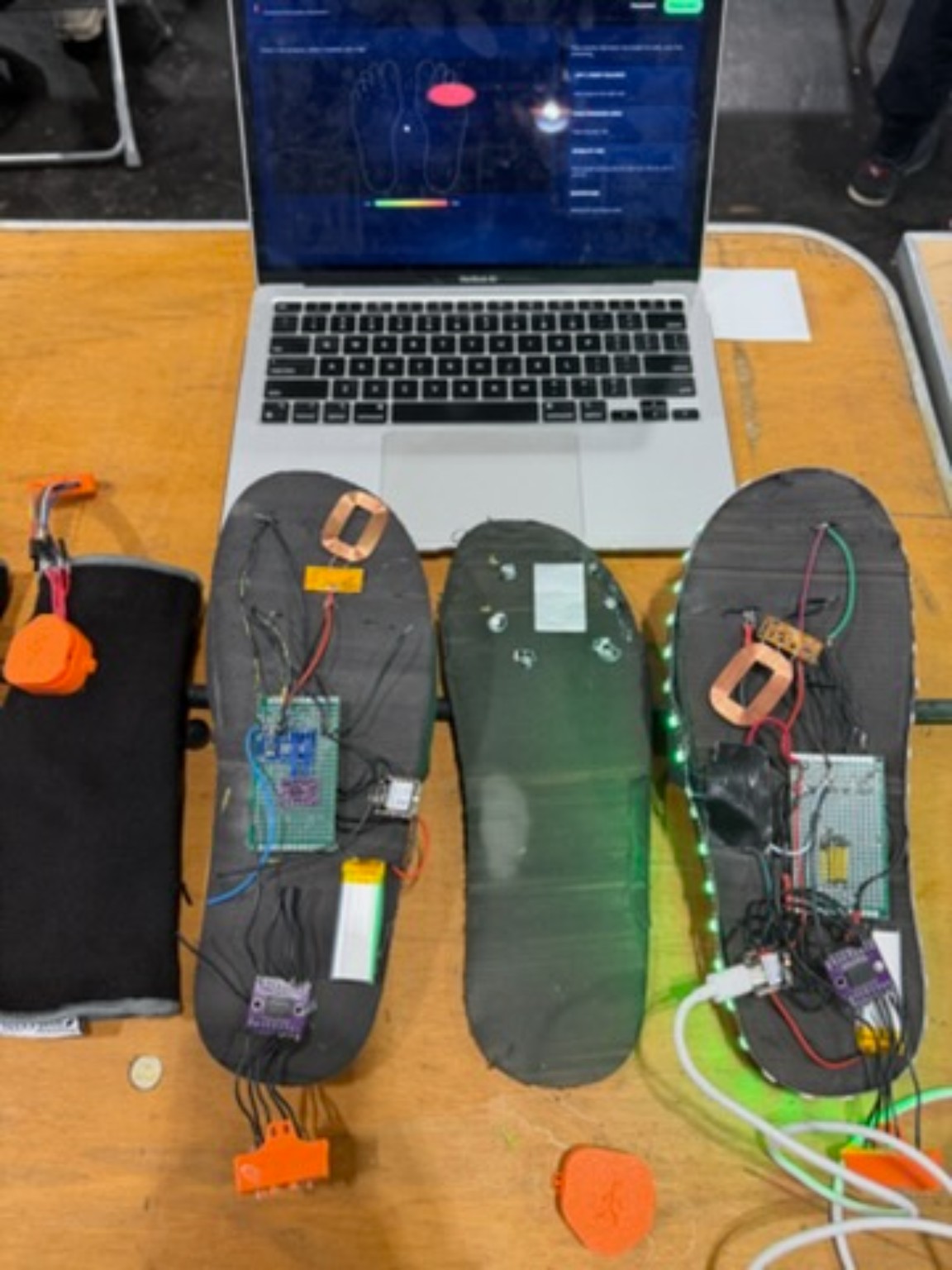
Sensing. A removable insole carries force-sensitive resistors (FSRs) under the parts of the foot that take load when standing and walking: heel, ball of the foot, and big toe/arch.
Processing. An ESP32-class microcontroller reads the FSRs, works out where the foot is loaded (heel vs. toe, inside vs. outside edge), and picks a vibration pattern.
Feedback. Four small vibration motors (LRAs) sit around the calf, driven by DRV2605-class driver chips. Where the foot is loaded decides which motor buzzes, so heel, toe, and inside/outside loading each feel different. The wearer feels where their weight is without looking at anything.
Design decisions
We considered electrical muscle stimulation for the feedback and rejected it in favor of vibration motors on skin that still has feeling.
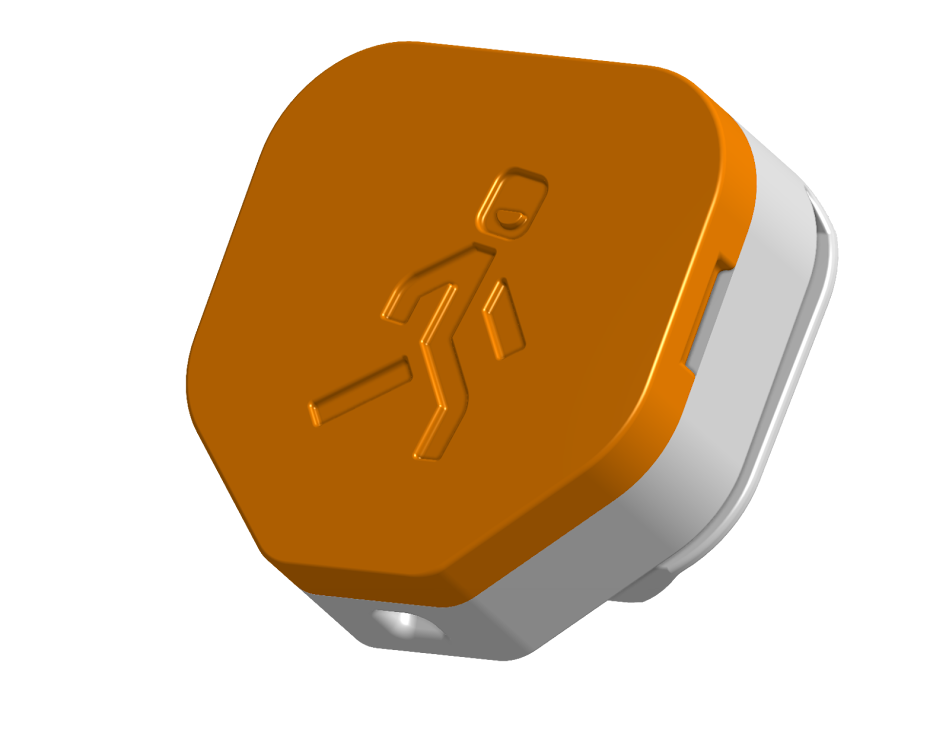
The insole is removable so the sensing layer can be swapped or replaced independently of the calf-worn unit.
Outcome
A working prototype: sensor insoles, the microcontroller and driver electronics, the calf band with the four motors, and a laptop view of live pressure data. It was built over the hackathon and demonstrated at the end, and received an award from Analog Devices.