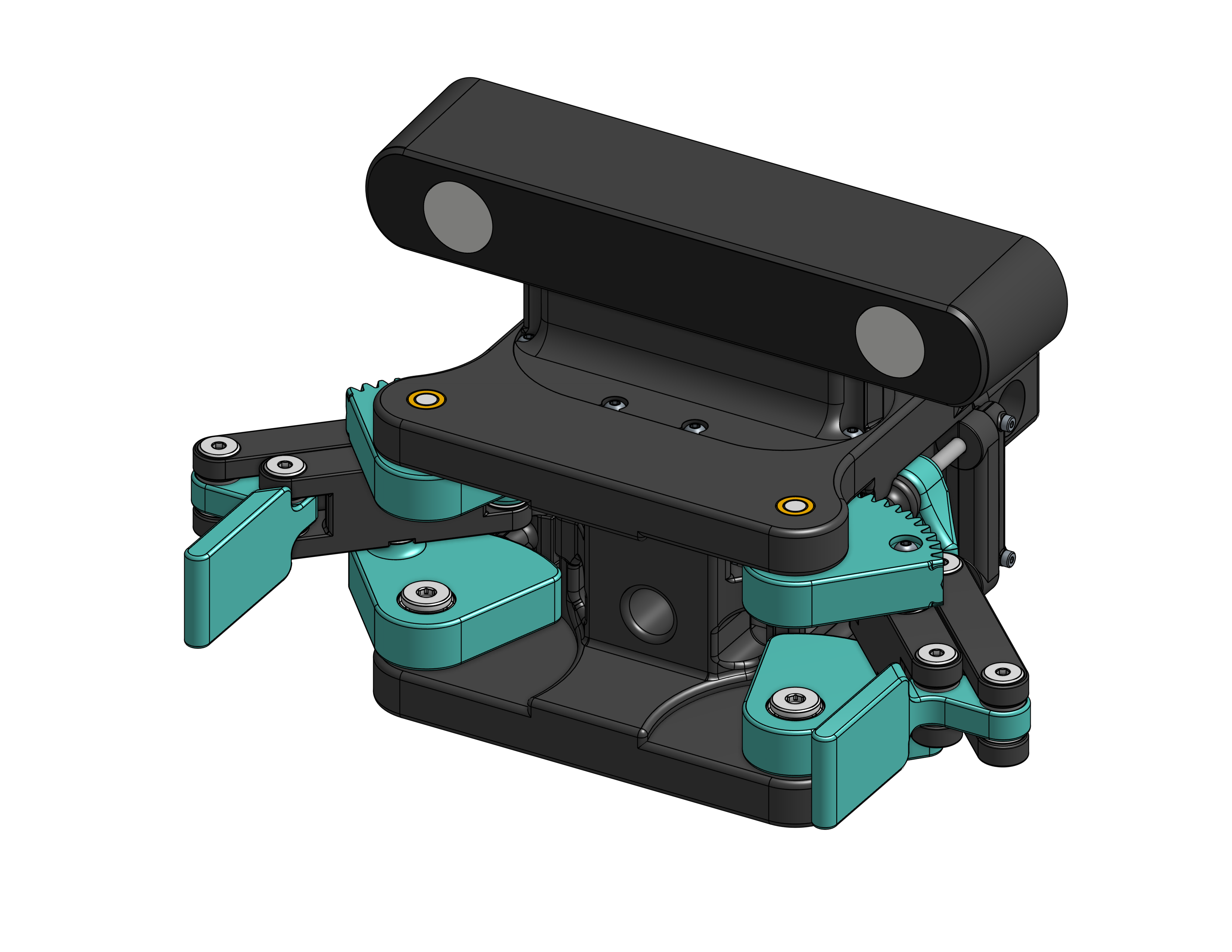
Part of my research work at LIDAR — see Humanoid Robotics at LIDAR for the tactile-sensing and arm-integration context around this mechanism.
Overview
Redesigned the primary end-effector for LIDAR’s custom humanoid auxiliary arm, which mounts onto an Agility Robotics Digit humanoid. The redesign was prototyped in 3D-printed parts but was not mounted on the arm before the project ended. The previous design used a rack-and-pinion mechanism with limited stroke and structural flex.
The new architecture replaces it with a dual-servo crank–four-bar driving a linear slider, increasing stroke and stiffness, with provisions for integrated tactile sensing.
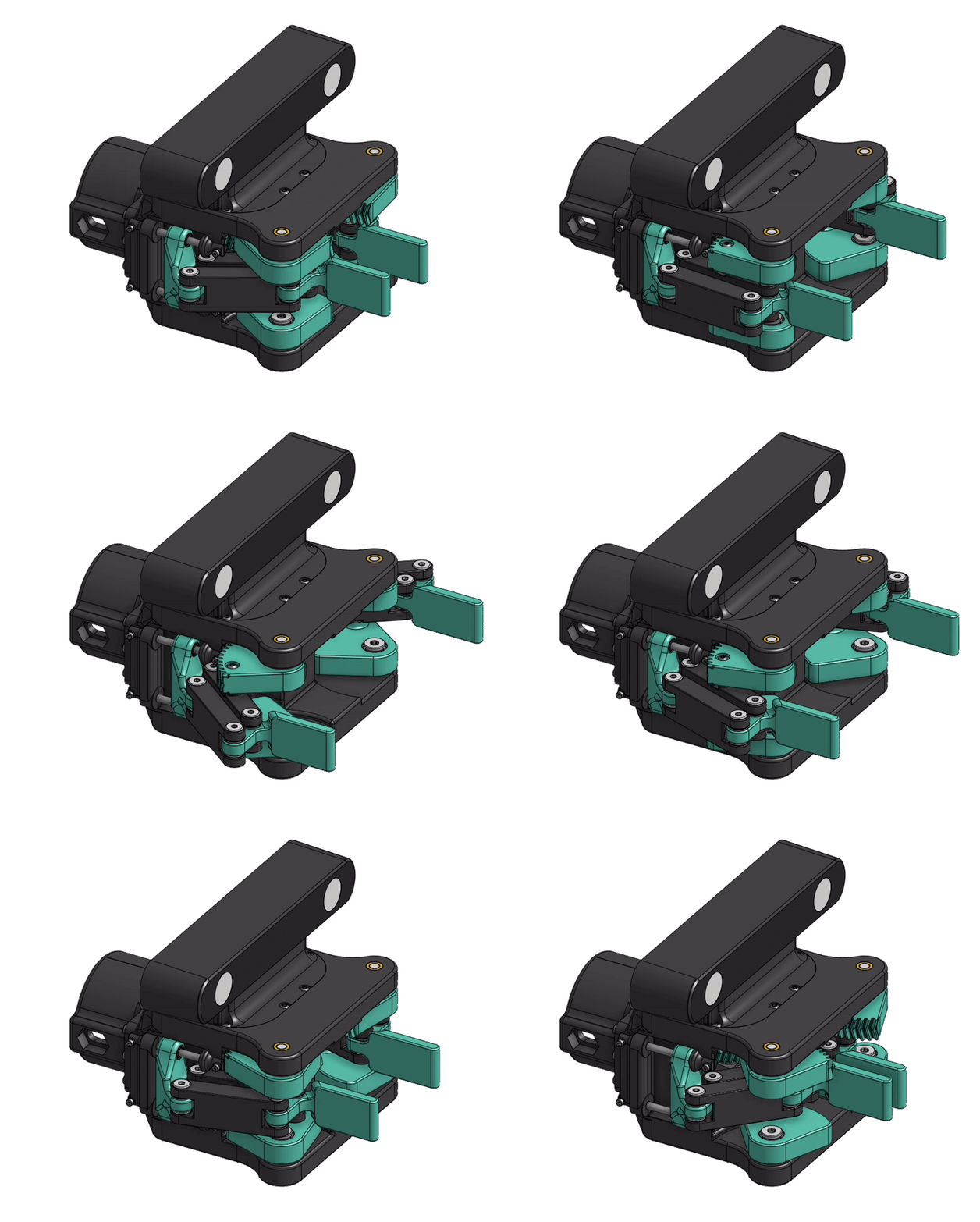
CAD motion study of the linkage-driven jaw actuation.
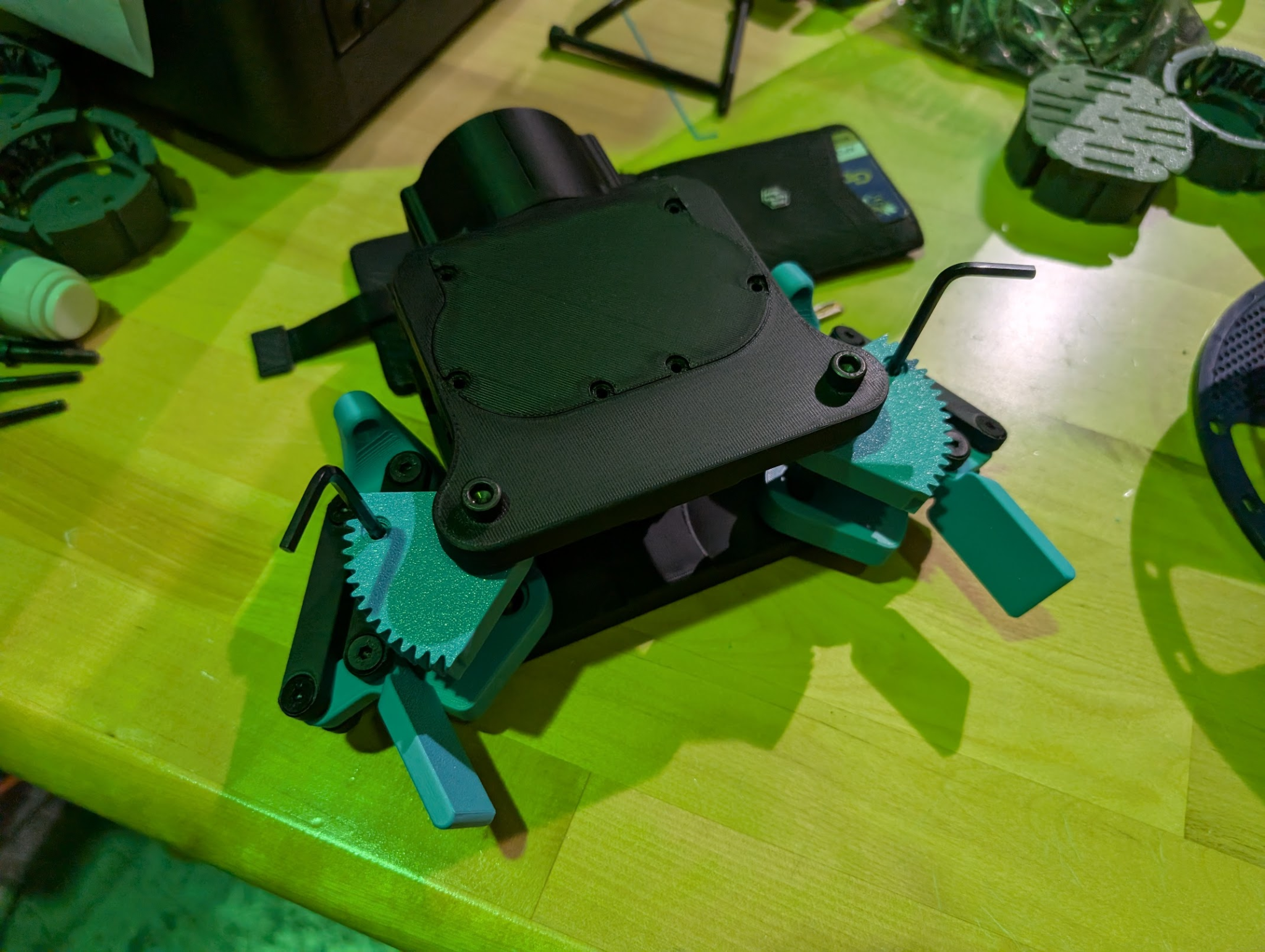
Early 3D-printed prototype parts (mock assembly).
Previous Design
- Rack-and-pinion parallel jaw mechanism
- Idler pulleys to maintain mesh
- Linear shafts for guidance
- Press-fit linear bearings (omitted in early prototypes)
- 54mm stroke
Primary issues:
- Backlash and mesh sensitivity
- Singly supported rack
- Assembly and tolerance complexity
- Structural flex under manual loading
Redesign
The new design uses a dual-servo crank–four-bar driving a linear slider.
- 2× 3.5 Nm servos
- 1.8:1 reduction
- Linear rails with bearings for constrained motion
- 6.6” total jaw stroke (+2” over previous)
- ~325 N theoretical closing force at stall
- 6” overall width (same footprint)
- 1.9 lb total mass (including ZED2 depth camera)
The crank-slider architecture removes gear mesh failure modes and distributes loading symmetrically.
All components were 3D printed for prototyping; high-load elements were intended to move to metal after validation, but the project concluded before that step.
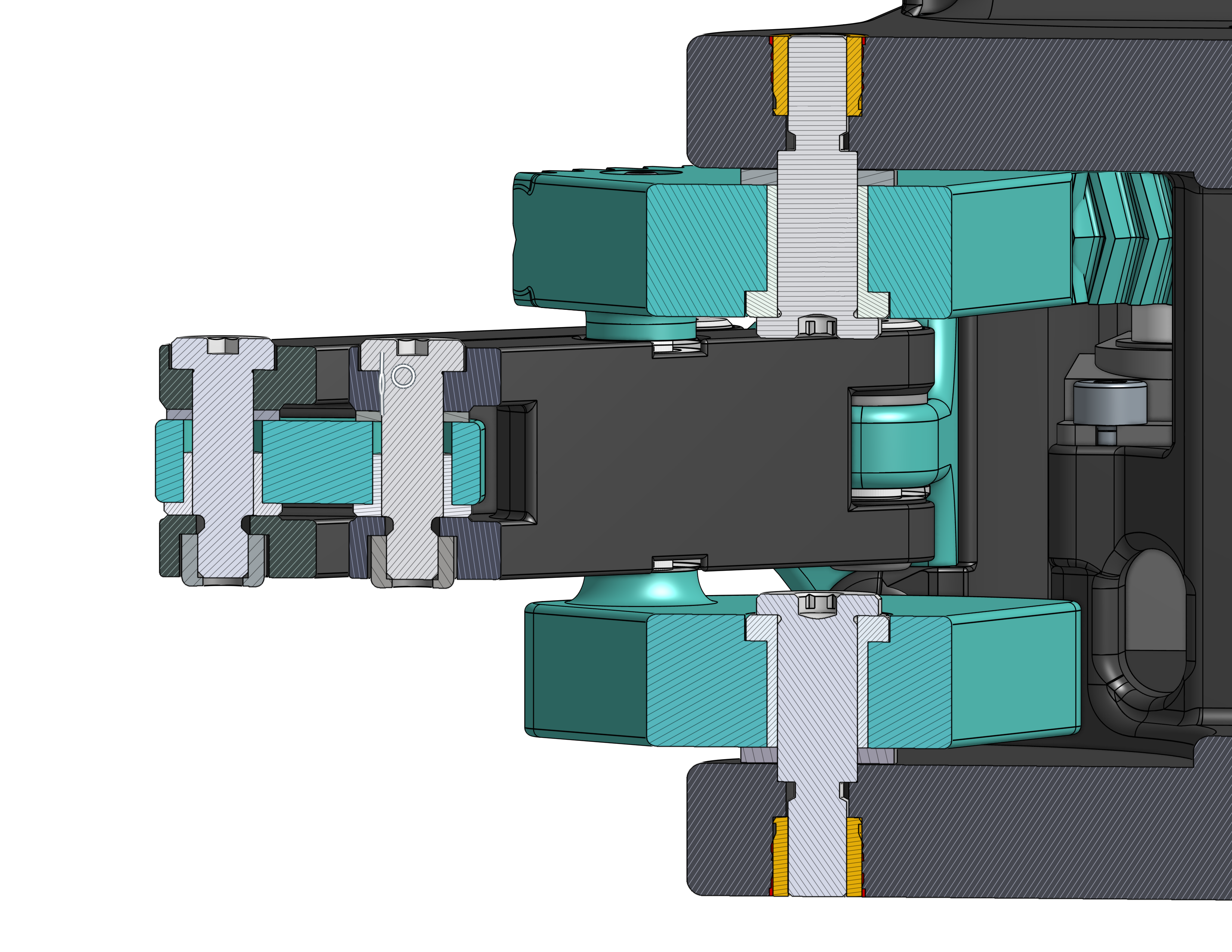
Linkage section view showing shoulder bolts, bushings, and thrust bearings in the axle stackup.
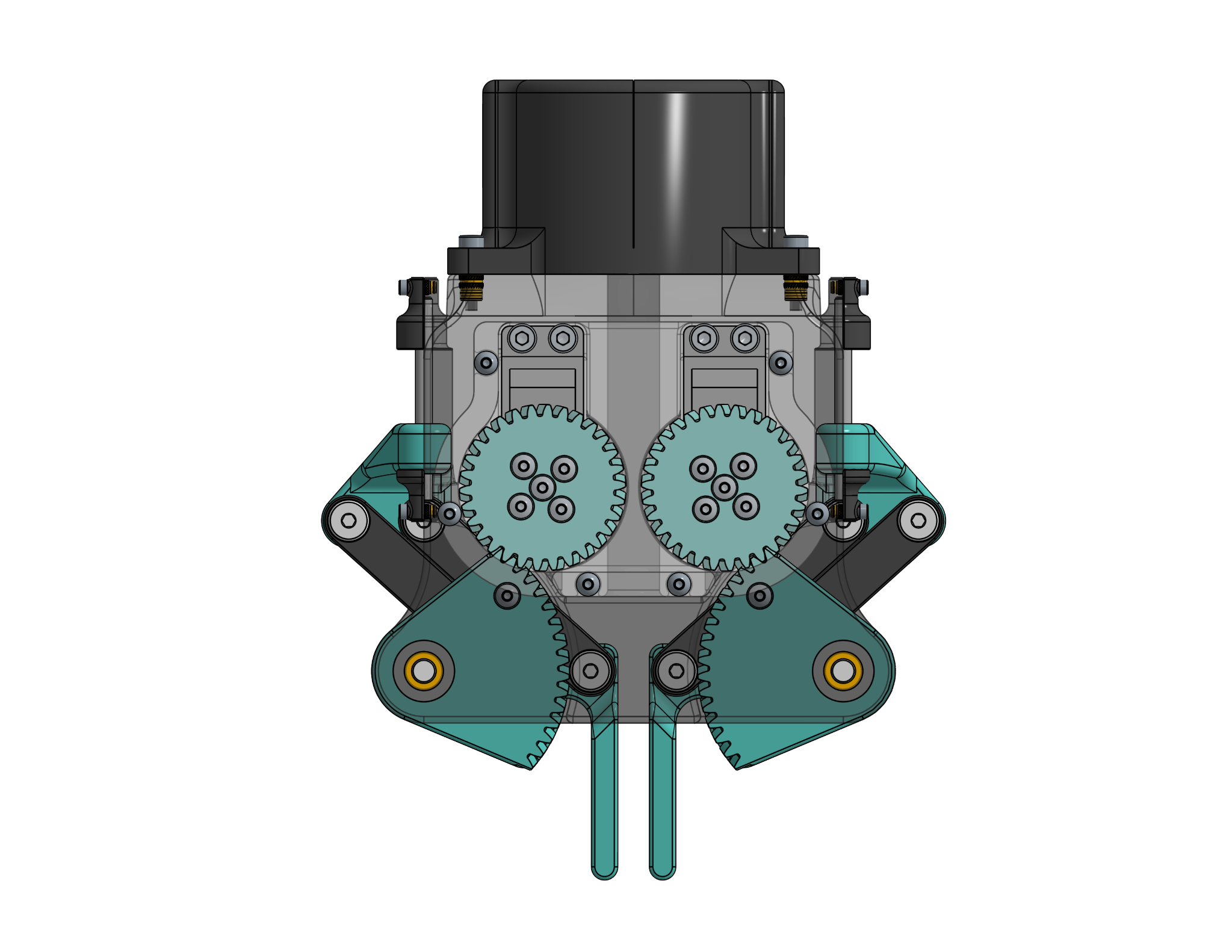
Top view of dual-gear drive layout and packaging within a 6” footprint.
Tactile Integration (Prototyped, Unfinished)
The gripper was designed to incorporate compliant magnetometer-based tactile pads following the magnetic microstructured sensing approach introduced in eFlesh (project website).
The approach uses embedded magnets within deformable TPU microstructures, with magnetic field variation measured by MLX90393 magnetometers to infer contact forces.
Target configuration:
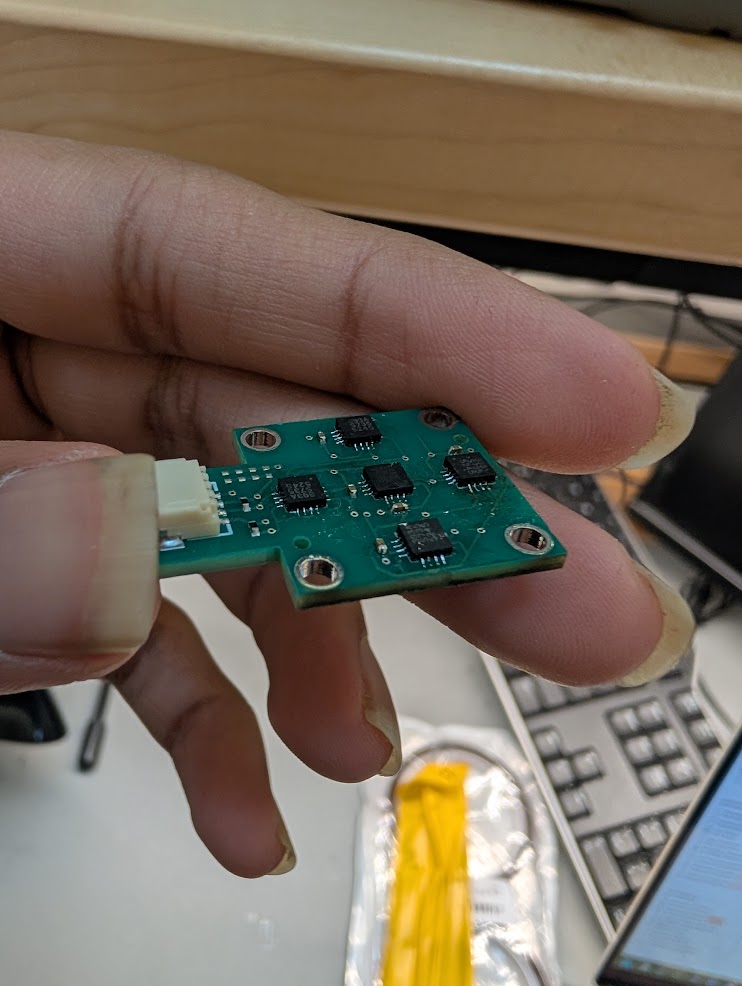
- 10 magnets and MLX90393 magnetometers per finger
- TPU cut-cell microstructured pads with embedded magnets
- Internal wire routing through a central tunnel
- Modular finger interfaces for rapid swapping
Magnetometer array PCBs were ordered and partially assembled and the finger/pad geometry was designed, but the sensing subsystem was not completed or validated before the project wound down in May 2026.
Status
May 2026 — Concluded. Mechanism design and part fabrication were complete; the gripper was not mounted on the arm, and tactile-sensing PCB assembly and integration remained unfinished when my time at LIDAR ended.
3/19/2026:
- All part design and fabrication complete.
- PCBs in process of being assembled - 1/5 complete
- Wiring diagram and control components ordered from Adafruit
- Parts largely arrived
2/16/2026:
- CAD largely complete
- Fingers with integrated compliant tactile pads, sensor cavity, and wire routing pending
- Version 1 parts printed
- Version 2 with camera mount, improved back rail support pending
- Fasteners and other commercial-off-the-shelf parts ordered
- Magnetometer array PCBs ordered partially assembled from JLCPCB
- Magnetometers ordered from Digikey